
Dataset highlights
Selected images
Select an image to view the original
-
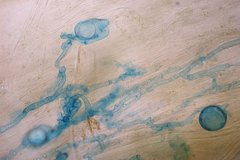 Open original image in a new tab
Symphyogyna brasil -
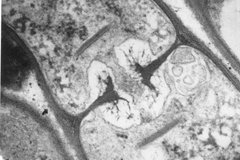 Open original image in a new tab
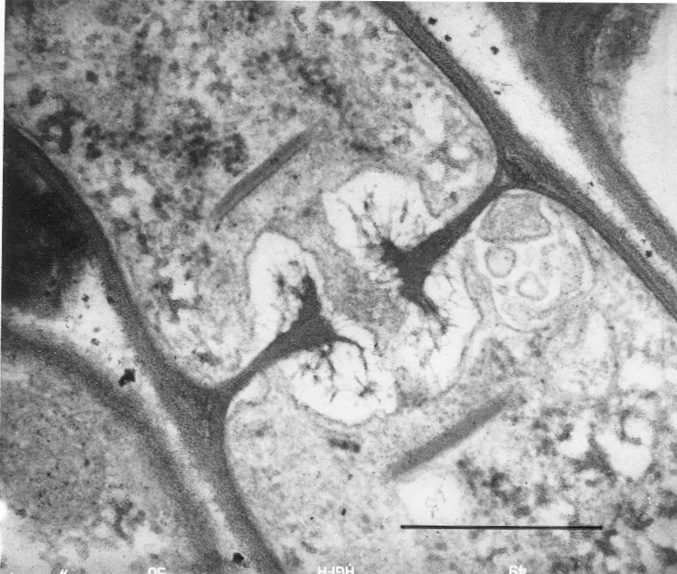
Calypogeia muel Sebacina -
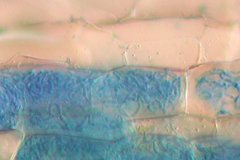 Open original image in a new tab
Aneura Quer RGB -
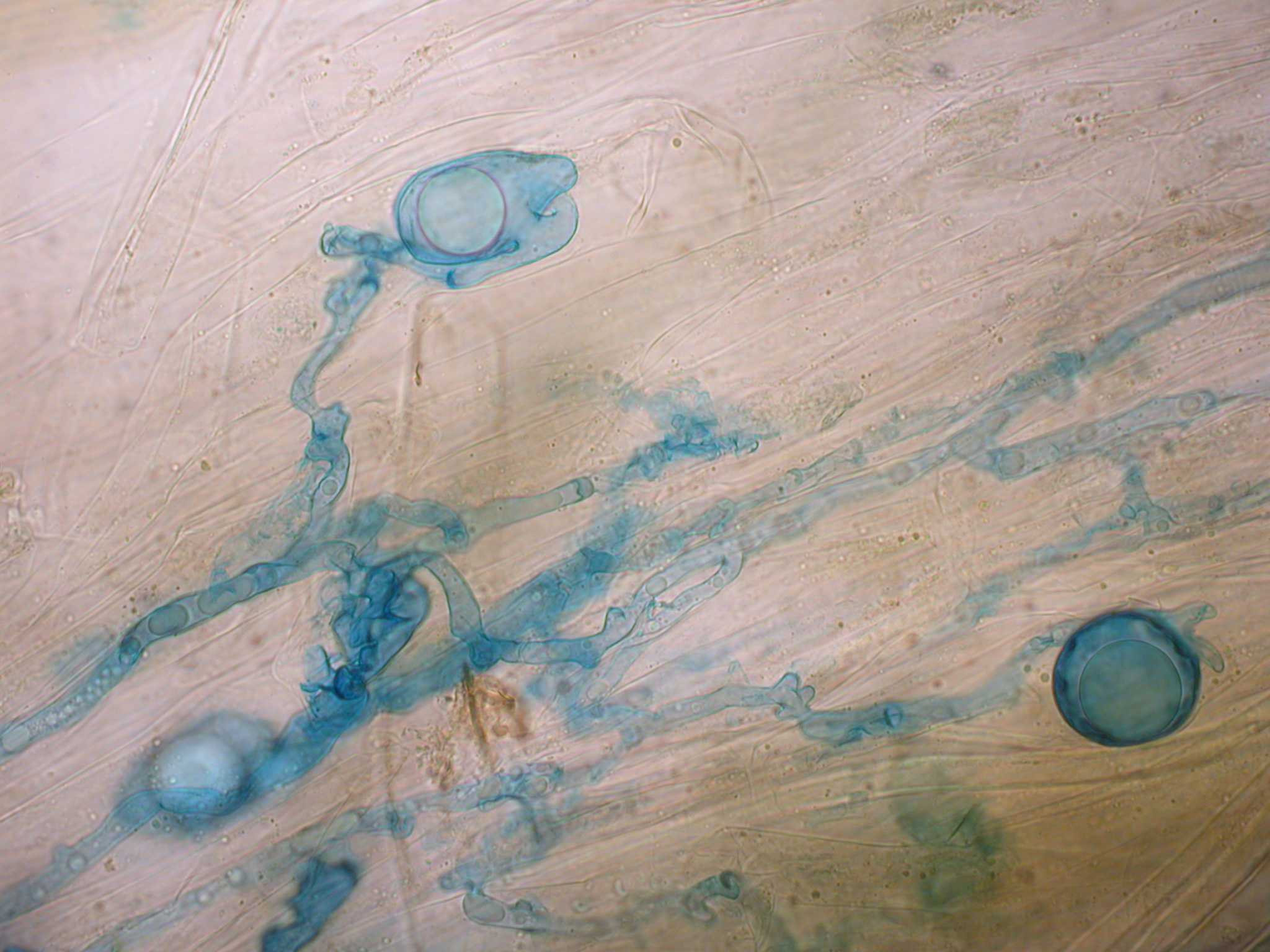
 Open original image in a new tab
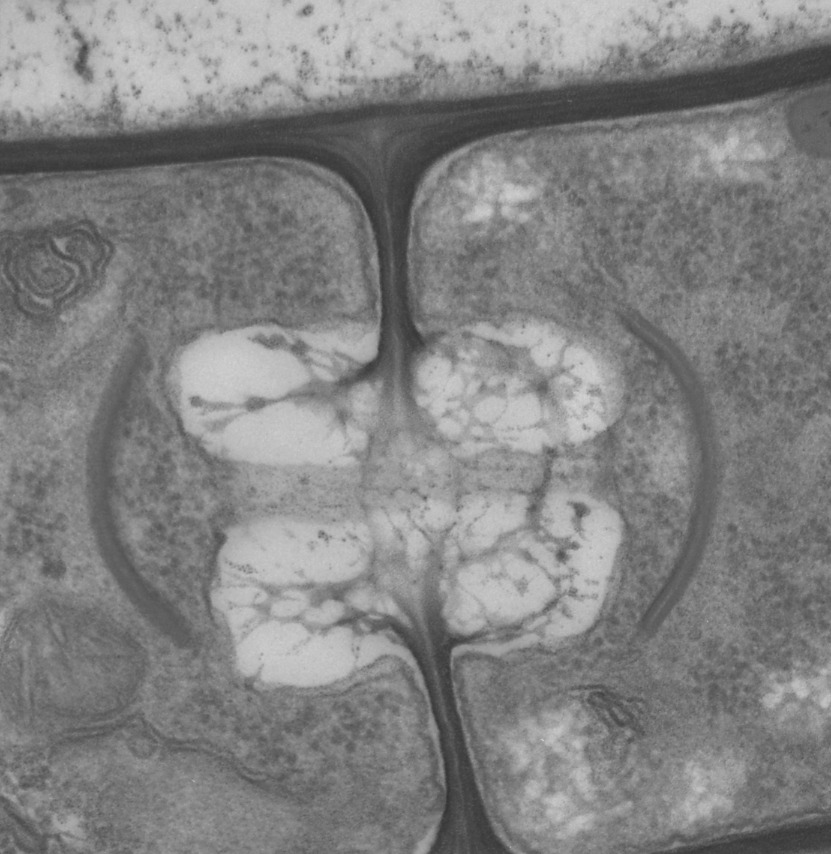
Aneura 1-4 Porus

About the collection
The collection
Liverworts are considered to be the oldest terrestrial plants. They undergo a connection with fungi that represents the oldest symbiosis between plants and fungi.
This symbiosis was studied for the very first time in a tropical forest within the frame of the DFG Research Unit 402: Functionality in a Tropical Mountain Rainforest - Diversity, Dynamic Processes and Utilization Potentials under Ecosystem Perspectives. The investigation area is situated in South Ecuador near to the city of Loja and extends from 1.000 to 3.000 m above sea level. Symbiotic fungi were found in 42 liverwort and two hornwort species. Several associations were new for science or for the Tropics. The fungi originate from three related groups: Glomeromycetes (Glomeromycota), sac fungi (Ascomycota), and basidiomycetes (Basidiomycota). Under the basidiomycetes, the two genera Sebacina and Tulasnella were found. Both genera are new symbionts of liverworts for the Tropics.
Over 80% of all terrestrial plant species exhibit a symbiosis with fungi (Mykorrhiza). As liverworts are the first terrestrial plants there is strong indication that this symbiosis arose in them and switched over to clubmosses, ferns and finally to phanerogams. Liverworts are seen for this reason as vectors for symbiotic fungi.
These investigations were carried out together with the Institut für spezielle Botanik of the University of Tübingen. They were first possible through a combination of light and electron microscopy with DNA analysis. All vouchers are kept at the herbarium STU of the State Museum for Natural History Stuttgart. The museum holds one of the most valuable collections of moss-fungus-symbiosis worldwide.
Easy-language version
Liverworts and fungi in a tropical mountain rainforest
Liverworts are thought to be the oldest plants that live on land.
Liverworts often live together with fungi. Both can benefit from this relationship. This is called a symbiosis.
The relationship between liverworts and fungi may be the oldest symbiosis between plants and fungi.
Research in Ecuador
Researchers studied this symbiosis in a tropical forest for the first time.
The study was part of DFG Research Unit 402. The group studied a tropical mountain rainforest. It looked at:
- the variety of plants and other living things,
- changes in the forest,
- possible ways to use the forest,
- the forest as a complete ecosystem.
The research area is in southern Ecuador, near the city of Loja.
The area lies between 1,000 and 3,000 metres above sea level.
The researchers found fungi in:
- 42 species of liverworts,
- 2 species of hornworts.
Several relationships between mosses and fungi were new to science. Some of these relationships were also new for tropical regions.
Which fungi did the researchers find?
The fungi belong to 3 related groups:
- Glomeromycetes,
- sac fungi,
- club fungi.
Among the club fungi, the researchers found 2 groups:
- Sebacina,
- Tulasnella.
These 2 groups of fungi were not previously known as partners of liverworts in tropical regions.
Why is this important?
More than 80 percent of all land plant species live together with fungi. This relationship is called mycorrhiza.
Liverworts are among the first plants that lived on land. Therefore, there is strong evidence that this relationship with fungi may have started in liverworts.
Later, it may have spread to other plants. These include:
- clubmosses,
- ferns,
- seed plants.
Liverworts may therefore help fungi move to other plants.
How did the researchers work?
The research was carried out together with the Institute of Special Botany at the University of Tübingen.
The researchers used several methods:
- light microscopy,
- electron microscopy,
- DNA analysis.
These methods helped them identify the fungi correctly.
All collected samples are kept in the STU herbarium. The herbarium belongs to the State Museum of Natural History Stuttgart.
The museum has one of the world’s most valuable collections of moss-fungus symbioses.
Glossary
- DNA
- DNA is the genetic material of a living thing. It helps researchers identify species.
- Herbarium
- A herbarium is a collection of dried and documented plant samples.
- Mycorrhiza
- Mycorrhiza is a relationship between plants and fungi. Both sides can benefit from it.
- Symbiosis
- A symbiosis is a close relationship between different living things. Usually, both sides benefit.
- Tropical regions
- Tropical regions are warm areas around the Equator.
Background
Data project and service
The Ministry of Science, Research and the Arts Baden-Württemberg (opens in a new tab) supported inventory, digitisation and online access to the collections.
The data project “Tropical liverworts serving as vectors of symbiotic fungi at the Naturkundemuseum Stuttgart” and, unless stated otherwise, its supporting files are copyrighted © 2014– by the Staatliches Museum für Naturkunde Stuttgart.
Please note
Typing and other errors may occur. If you discover an error, please contact the editorial staff at the SMNS.