
Dataset highlights
Selected images
Select an image to view the original
-
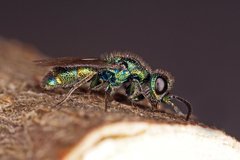 Open original image in a new tab
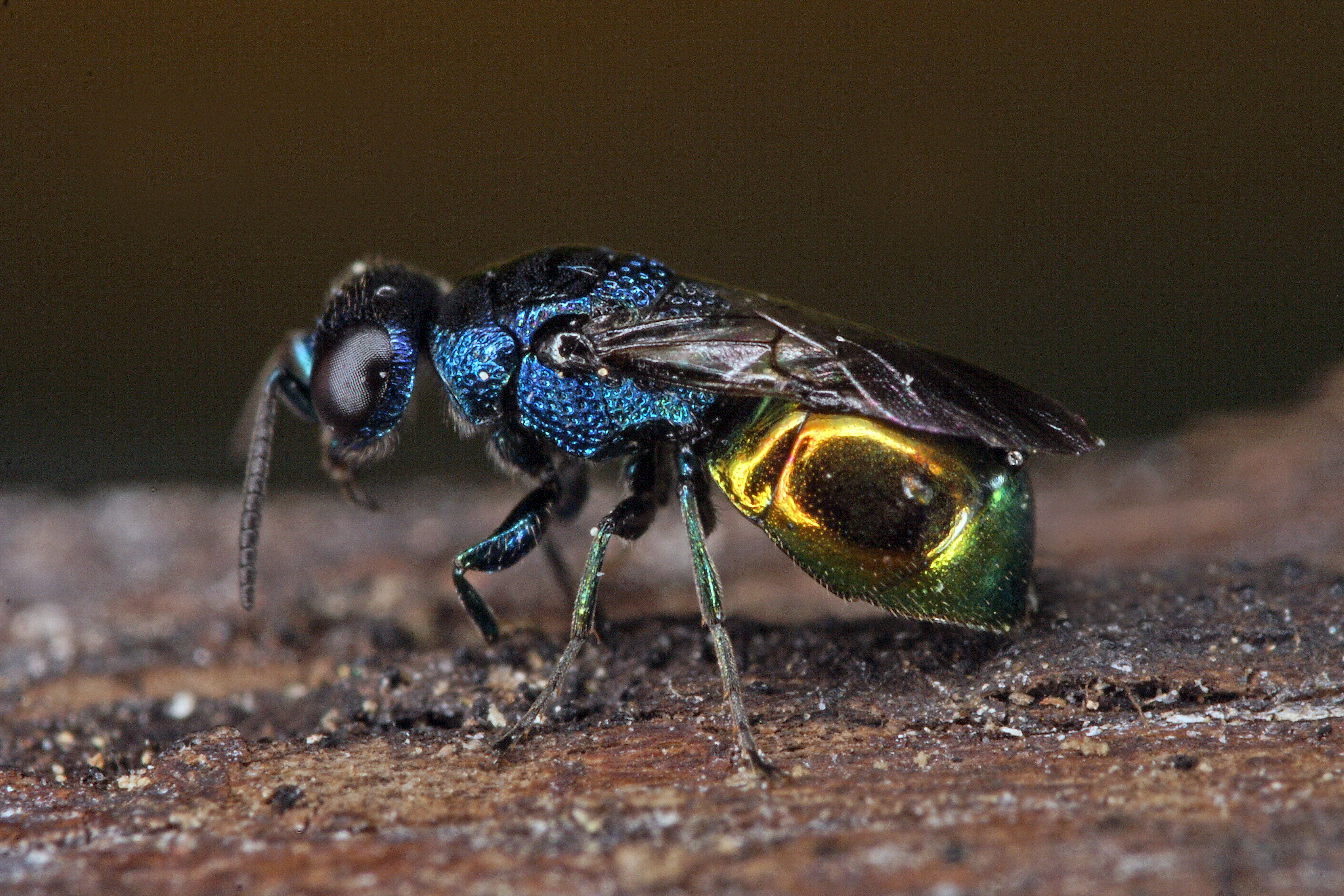
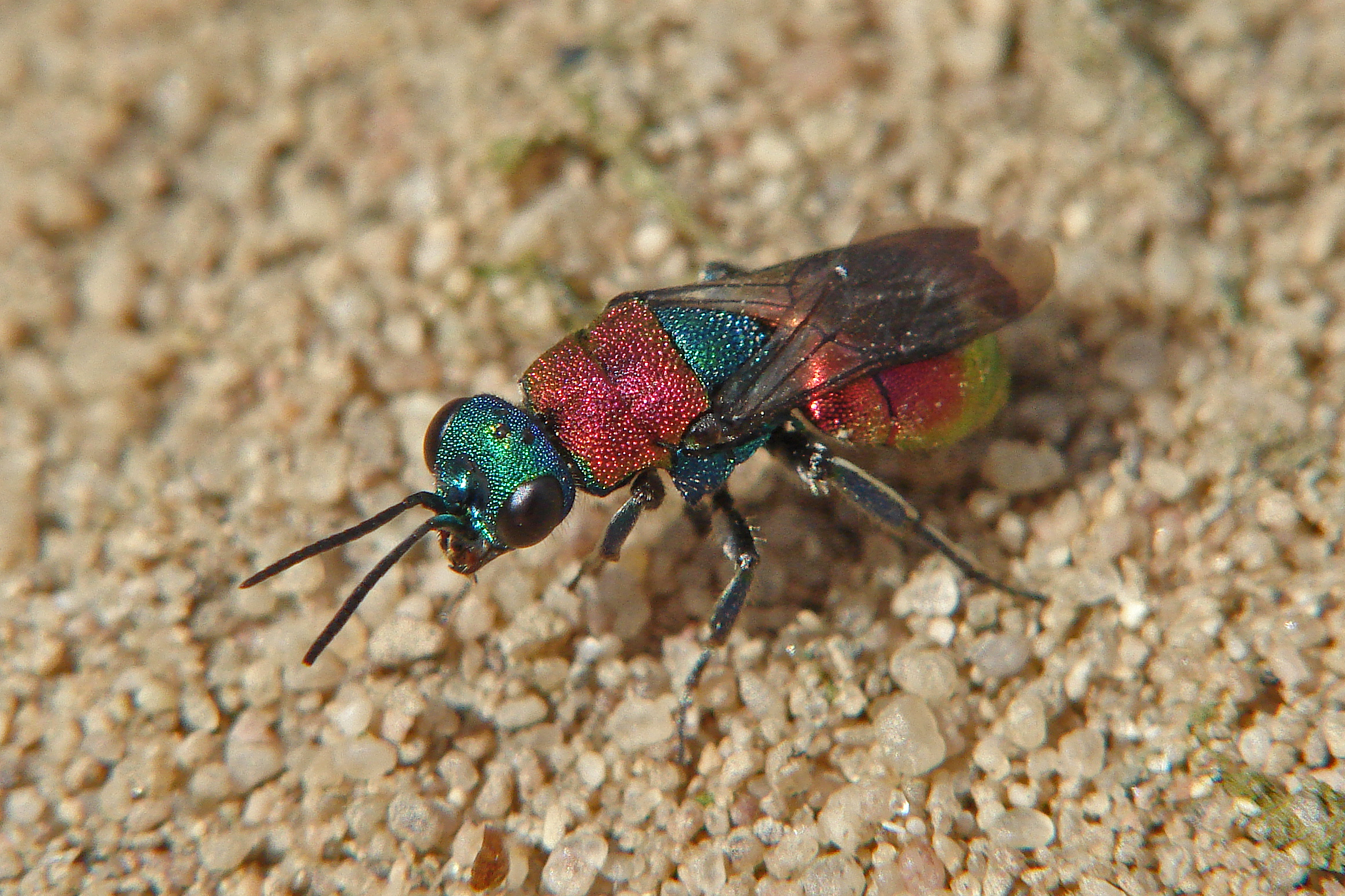
Trichrysis cyanea -
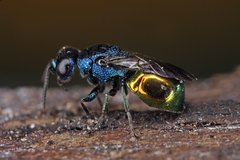 Open original image in a new tab
Omalus aeneus -
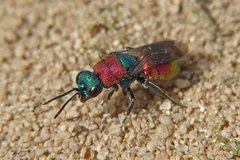 Open original image in a new tab
Hedychrum niemelaei -
Open original image in a new tab
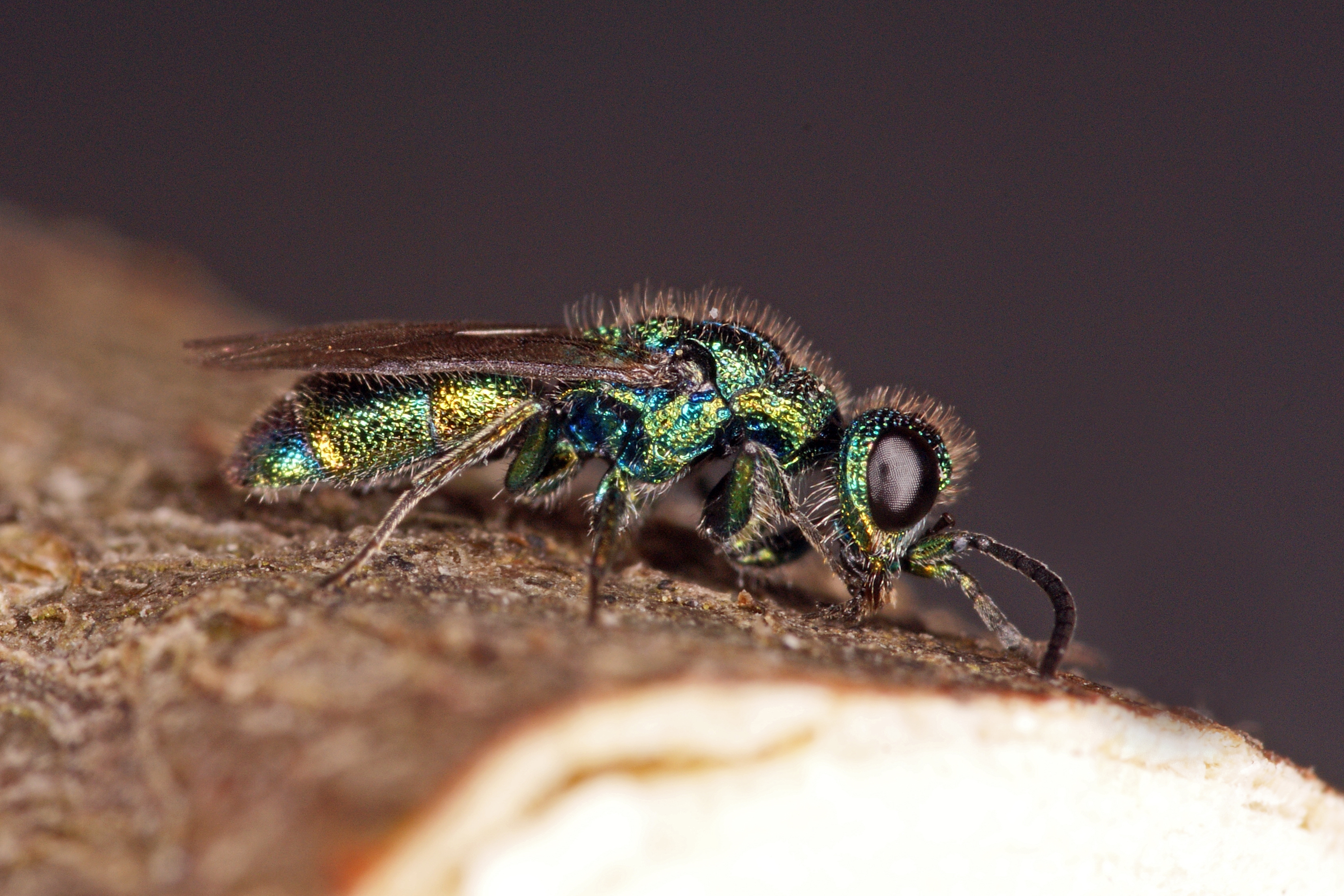
Chrysis ignita
About the collection
The collection
The Golden wasps collection at the Staatliches Museum für Naturkunde Stuttgart (SMNS) contains about 780 specimens collected in Baden-Württemberg between 1900 and 2000. It has been expanded by some 30 specimens between 2012 and 2015, mainly through sampling efforts within the frame of the project GBOL (German Barcode of Life). The collection contains 61 species representing more than 50% of the known species spectrum for Middle Europe (120).
Chrysidids are parasitoids of other insects, meaning that they kill their hosts at late stages of their development. Some species are cleptoparasites, what means that they use the food carried on by the host as resource for their larvae.
Easy-language version
Golden wasp collection
The State Museum of Natural History Stuttgart (SMNS) has a collection of golden wasps.
The collection has about 780 specimens. These specimens were collected in Baden-Württemberg between 1900 and 2000.
Between 2012 and 2015, the museum added about 30 more specimens.
Most of these specimens were collected for the project GBOL. GBOL means German Barcode of Life.
The collection contains 61 species of golden wasps.
In Central Europe, about 120 species of golden wasps are known. The Stuttgart collection includes more than half of these species.
How do golden wasps live?
Golden wasps are also called chrysidid wasps.
Golden wasps use other insects to raise their young.
The young golden wasps live in or near another insect. This insect is called the host.
The young wasps kill the host late in its development.
Some golden wasps are cleptoparasites. They use food that the host has collected for its own young.
The golden wasp larvae eat this food.
Glossary
Central Europe
Central Europe is a region in Europe. It includes countries such as Germany, Austria, and Poland.
Cleptoparasite
A cleptoparasite takes food that another animal collected or prepared.
Host
A host is an animal that another animal uses for food or development.
Larva
A larva is the young form of an insect. For example, a caterpillar is the larva of a butterfly.
Parasitoid
A parasitoid is an animal that develops on or in another animal. It kills that animal before it becomes fully grown.
Specimen
A specimen is one animal collected and kept in a museum collection.
Background
Data project and service
The Ministry of Science, Research and the Arts Baden-Württemberg (opens in a new tab) supported inventory, digitisation and online access to the collections.
The data project “The Golden wasps collection at the Naturkundemuseum Stuttgart” and, unless stated otherwise, its supporting files are copyrighted © 2014– by the Staatliches Museum für Naturkunde Stuttgart.
Please note
Typing and other errors may occur. If you discover an error, please contact the editorial staff at the SMNS.